
Your Seasons Will Change
📬Letter #10: What Spring Taught Me About Loss, Timing, and Trust

Practice didn’t make me stronger in the way the world defines strength.
It made me softer, gentler.
Softer in how I meet life.
Softer in how I hold people.
Softer in how I respond when things fall apart.
And strangely, that softness made everything clearer.
I began to see life exactly as part of nature.
Perfectly synced.
Perfectly timed.
Sometimes I understand why people believe in a creator (if there is one or more).
Life can feel that precise. That intentional.
As if everything—joy, loss, timing, endings—has been crafted by a master who understands rhythm beyond human control.
The Law We Keep Resisting
Like seasons, life does not ask for permission.
No matter how hot and endless summer feels—it ends.
No matter how brutally cold winter is—spring comes.
No matter how hard or beautiful this life feels—it also ends at some point.
Early April and late November are some of the most honest teachers, where dramatic transitions appear in the softest forms.
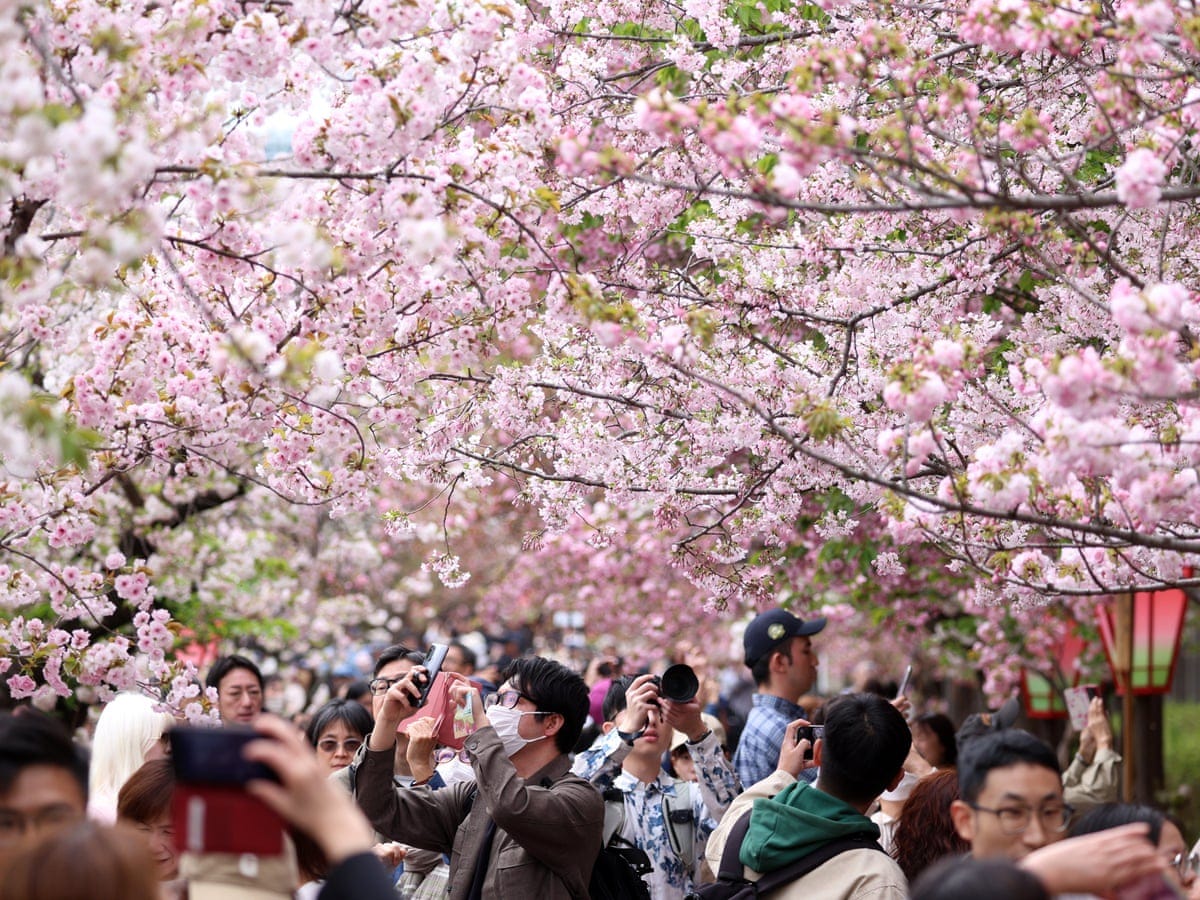
Cherry blossoms bloom like a celebration—then fall within days, if lucky, within weeks. Driving down the street, you see trees half pink at the bottom, half green at the top—like those Gen Z–popular matcha strawberry drinks—soft, temporary beauty and joy. Or trees half red-ish, half green.
And somehow… perfect.
In the Dhammapada, one of the most widely known Buddhist texts, there is a simple but piercing line:
“All conditioned things are impermanent—when one sees this with wisdom, one turns away from suffering.”
This is not even philosophy. It is simply observation—how trees become half-colored, then lose all leaves, flowers, and fruits at the end of one beautiful, flourishing cycle of life and seasons.
Where Suffering Actually Begins
Life becomes unbearable not because things change,
but because we resist that they do.
Flowers must fall for leaves to grow.
Leaves must fall for trees to survive winter.
Winter must come for life to renew.
Yet what do we do?
We become overly excited by blossoms, then mourn the falling flowers.
We resist aging.
We cling to relationships that have already shifted.
We try to hold onto a version of life that no longer exists.
We celebrate what feels pleasant and desirable, and feel sadness toward what feels unpleasant.
From a neuroscience perspective, this resistance is predictable.
The brain is wired for prediction and stability.
When reality deviates from expectation, the brain registers it as a threat.
This activates the amygdala, increases stress hormones, and creates emotional discomfort.
So what we call “suffering” is often
the nervous system reacting to change as danger.
But in reality—nothing has gone wrong.
Life is simply moving, as it is meant to, as it always has.
The Intelligence of Cycles
In Buddhism, this is known as anicca—impermanence.
Not as a concept, but as the fundamental structure of existence.
Even the Buddha avoided metaphysical speculation and pointed directly to experience:
“Whether Buddhas arise or not, this remains a constant: all formations are impermanent.”
— Samyutta Nikaya
Nothing you have—your body, your relationships, your work, your identity—is designed to stay fixed.
And that is not a flaw, a reward, or a punishment.
That is the system working.
You Are Not Losing Your Life, You Are Moving Through It
If you are going through a hard season, it’s okay.
Learn to endure. Stay low and calm.
Spend your winter nourishing your soul, your knowledge, your inner development—instead of trying to force something to grow. Because it won’t grow in winter.
Admit your winter. Do what winter asks of you, and find quiet joy in it.
You will be just fine, just as you survived your busy, thriving summers.
Your life’s seasonal cycle is meant to move naturally—often against your wishes, your desire to hold on a little longer or to let go as quickly as possible.
What Practice Actually Does
Meditation didn’t remove difficulty from my life.
It changed how I interpret it.
Instead of: “Why is this happening to me?”
It became: “What season is this?”
Instead of: “How do I fix this?”
It became: “How do I meet this well?”
You don’t need to control your life.
You need to understand its nature.
Spring will come.
Even if you don’t believe in it.
And when it does, you will realize:
Nothing was truly lost.
It was only changing form.
The same life that takes something away is the life that brings something next.
So, if you’re in a festive, vibrant summer, don’t get too carried away, too attached—autumn and winter are never far.
And if you’re in the coldest, darkest winter, keep your head up and your heart open—spring will find you again.
It’s simply the seasonal cycle of life, not who you are.