Wiser, Better, More Efficient Decisions
🕊️Impact #4 :The real work of impact leadership (+ Impact Decision Toolkit).

How do I make wiser, safer, better, more efficient decisions?
But life itself is nothing but decisions.
From the moment we wake up—
when to open our eyes,
how to get out of bed,
what we feed into the system first,
what we wear,
who we speak to,
which message we send,
which silence we choose.
If we break life down into micro-moments, there are no truly “small” or “big” decisions. There is only cause and effect, each decision conditioning the next, and the next, and the next.
Decision Happens in Moments, Not Headlines
In early Buddhism, there is the concept of kṣaṇa (ksana)*—a “moment”, a functional unit of experience, a split second.
*(Buddhism) the smallest unit of time, of varying lengths depending on tradition:
roughly 0.11 seconds, defined as 1/65th of a 弾だん指し (danshi), where a 弾だん指し (danshi) is 1/12,000th of a day or 7.2 seconds
0.002 seconds, defined as 1/60th of a 念ねん (nen), where a 念ねん (nen) is 1/60th of a 弾だん指し (danshi)
1/75th of a second, defined as 1/6,480,000th of a day
The Buddha taught that experience unfolds as a rapid succession of discrete moments, each arising and passing based on conditions. Later Abhidhamma analysis describes mental events occurring extremely quickly—far faster than conscious awareness—creating the illusion of continuity.
What matters here is not the number, but the insight:
There is no stable, solid “now.”
There is only moment-by-moment conditioning.
Leadership decisions don’t appear fully formed at board meetings or crisis points.
They are built—quietly—through thousands of micro-decisions:
what we ignore,
what we assume,
what we rush,
what we fail to ask.
The decisions we label “big” feel big because of perception: because they involve more people, more time, more visibility.
Merges & Acquisitions feel bigger than choosing to pivot a project or an initiative.
A mass layoff feels heavier than one person resigning.
But structurally, they are made the same way: through conditioned minds responding under pressure.
Looking back on my own path, the decisions that stayed with me most were not the ones I made freely.
They were the ones I had to follow— decisions made by others that overturned my expectations, my plans, my hopes.
Impact work amplifies this pain.
Impact projects require partnerships, coordination, approvals, consensus.
They involve donors, directors, local staff, beneficiaries, timelines, power dynamics.
Control is rarely complete. And that is usually the point. Decisions often need to be made quickly and efficiently, particularly when projects directly and urgently affect people’s lives and health, as in humanitarian work.
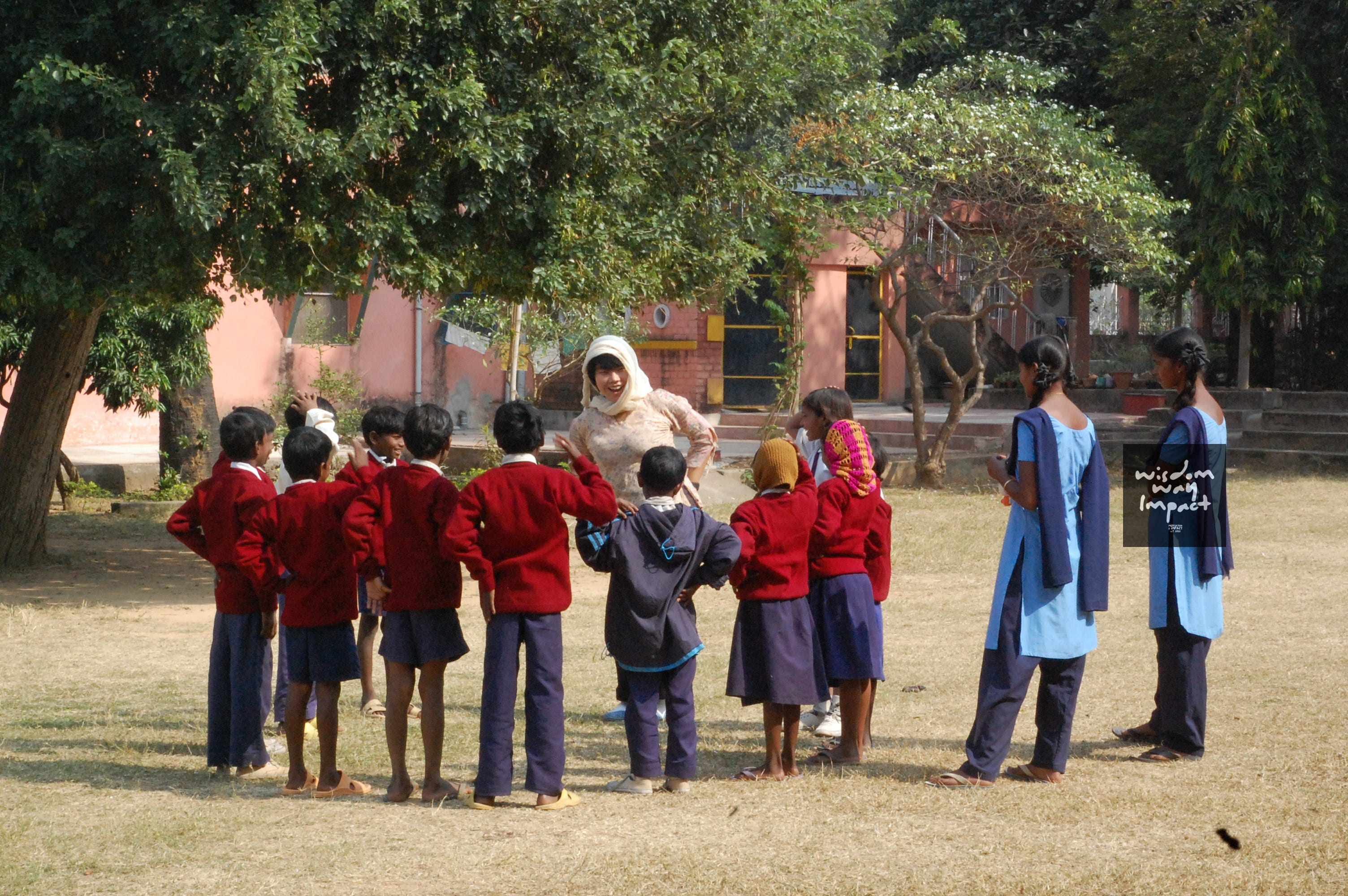
One decision I still remember clearly happened in 2010, in India.