
To all wounded minds 🌸🌕
📬Special Letter: Magha Bucha Day, The First Full Moon Day of Lunar Year - Daeboreum (대보름)

Magha Bucha Day & The First Full Moon of Lunar Year — March 3, 2026
The full moon rises for Magha Bucha Day, one of the most important observances in the Buddhist calendar. More than 2,500 years ago, 1,250 enlightened monks gathered spontaneously to sit with the Buddha. No invitation was sent. No announcement was made. Yet they arrived, drawn by the same understanding. That evening, under the full moon, the Buddha offered a teaching so simple it could fit within a breath:
To refrain from harm.
To cultivate what is good.
To purify the mind.
Magha Bucha is observed on the full moon because the full moon symbolizes completeness—nothing hidden, nothing lacking. In the same way, the path of practice is not about becoming something else, but about illuminating what is already here.
It is a day to remember that suffering is not a personal failure, and healing is not the removal of scars. The mind continues around its wounds. Nothing needs to be erased. Only understood.
Across Asia, full moon days have long been honored as moments of clarity and renewal. Before modern clocks and calendars, people lived by lunar rhythms—planting, harvesting, gathering, and reflecting under its light. The full moon symbolizes completeness—not because life becomes perfect, but because everything is briefly illuminated as it is.
Just as the moon moves through darkness to fullness, the mind moves through confusion, loss, and healing. Under the full moon, we remember: nothing needs to be erased. Only seen clearly.
Happy Magha Bucha Day, and happy first full moon of the lunar year. And happy birthday to me. May this first full moon bring clarity and peace.
Nature of Life
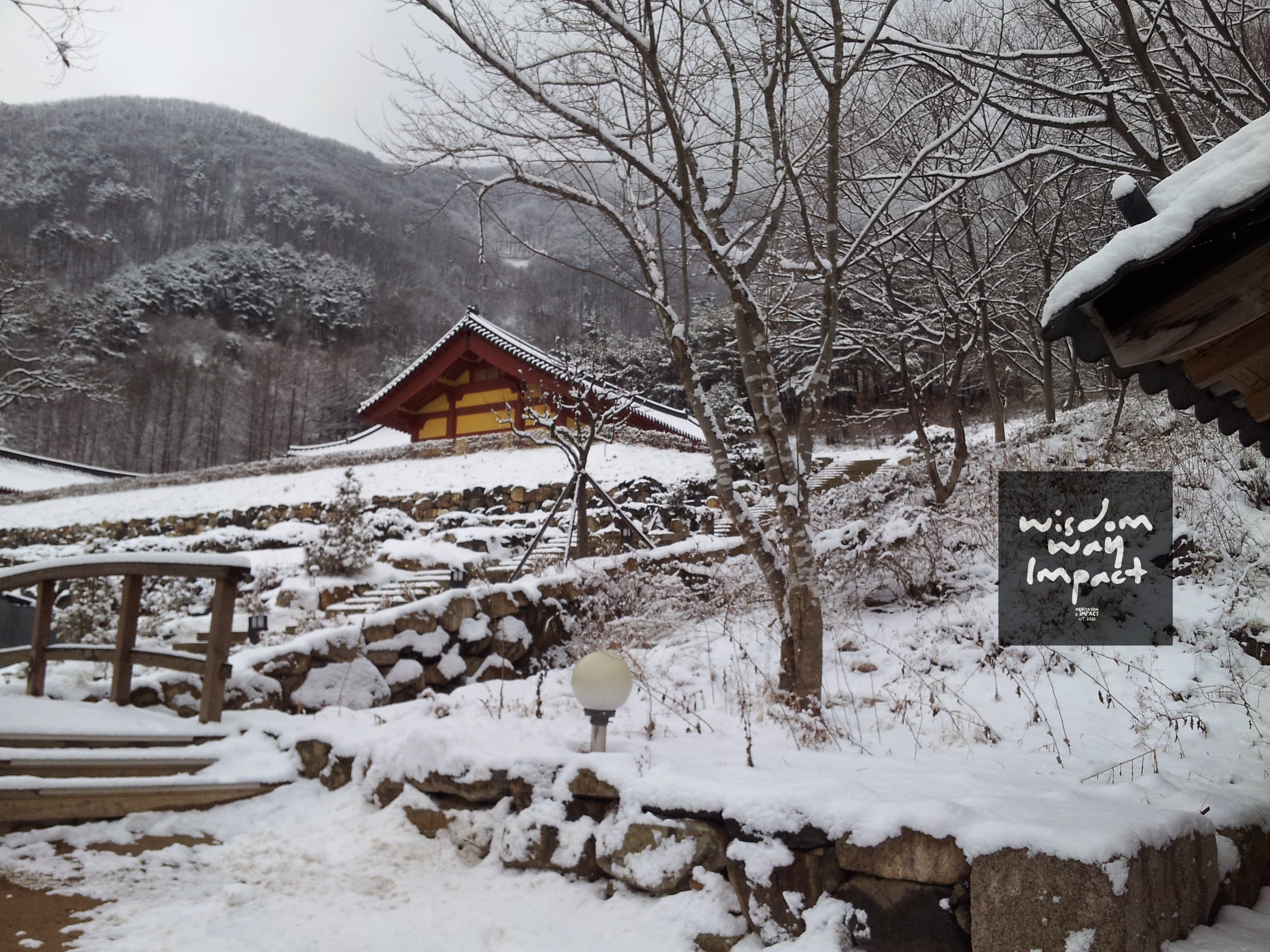
The sangha—the Buddhist monastery I first joined in 2008—was nestled deep in a quiet valley in the northeast of South Korea. Only about 20–30 practitioners and residents lived there, sustaining a fully organic and self-sufficient way of life, very seasonally dynamic too. Plastics were not allowed in the community. Every other week, we carried the waste pots from the toilets, handling human and organic waste directly, and developed our own fertilization system to return it to the soil for farming and vegetation, from potatoes to cabbages.
There were no laundry dryers; we hung our clothes under the sun and wind. In the summer, we cut back overgrown trees that blocked the residential paths, sometimes encountering snakes or other wild animals. We also gathered and prepared firewood in advance of winter to heat the living spaces.
One summer, while working among the trees, I saw them closely for the first time—not as scenery, but from the perspective of a practitioner. And I found knots on every single tree. Beautiful and different shapes, colors, sizes of knots that made every tree unique.
A tree does not grow only by pulling water and nutrients from its roots. It must also open its leaves to light and create energy. That is why it grows branches. Each branch reaches outward, gathers light, and sends nourishment back into the trunk so the whole tree can live.
But not every branch survives. Some are shaded by new growth. Some are wounded by storms, insects, or time. When a branch dies or breaks away, the tree does not abandon itself. It releases protective resins, sealing the wound. As the trunk continues to grow, the place where the branch once lived becomes embedded within it. This is called a knot.
There are living knots—formed from branches that were once strong and fully part of the tree’s life. And there are dead knots—marks of branches that could not continue, that fell away after injury or loss. Yet both remain inside the tree. They do not disappear. They become part of its structure.
Our minds are the same, every and each of us have knots in mind.
Every attachment, every hope, every attempt to reach toward light becomes a branch of our life. Some relationships nourish us. Some dreams strengthen us. Others break. Others fall away. When we are hurt, the mind protects itself. It seals the wound so we can continue living. But the trace remains, I mean every trace.
These knots in the heart are not defects. How we see and meet those knots make them ‘lessons and experiences’ or ‘ugly memories and weaknesses’. They are simply evidence of having lived, of having reached, of having endured conditions we did not choose. They show where we once needed light, where we struggled, where we healed.
If you look at a tree, its knots tell its history—its storms, its seasons, its persistence.
If you look at your wounded mind with the same understanding, you may see not something broken, but something that continued to grow.
Practicing Buddhist philosophy in life is to understand there’s nothing to hold too seriously.
This story comes from the early Buddhist tradition and is known as Kisāgotamī and the mustard seed.
A young mother named Kisāgotamī lost her only child. The boy had been healthy, laughing just days before. Then suddenly, he fell ill and died.
She could not accept it.
She carried his small body in her arms from house to house, asking everyone for medicine.
Not comfort. Not condolences. Medicine.
She believed someone, somewhere, could bring him back.
People pitied her. Someone said, “Go to the Buddha. He may be able to help you.”
She went to him, super desperate, still holding the child in her arms.
“Please,” she said. “Give me medicine to save my son.”
The Buddha looked at her with quiet compassion and said,
“Yes. I can help you. But first, bring me a handful of mustard seeds—from a household where no one has ever died.”
This was simple. Every home had mustard seeds.
She went to the nearest house and asked, “May I have some mustard seeds?”
“Yes,” they said kindly. “Of course.”
Then she asked, “Has anyone in this house ever died?”
The family looked at her gently. “Yes. Our grandfather just a couple days ago.”
She moved to the next house.
“Yes, take the mustard seeds,” they said.
“But has anyone here died?”
“Yes. Our daughter, around this time last year.”
House after house, door after door, the answer was the same.
A father. A mother. A sister. A husband. A friend.
By evening, she had collected no seeds.
But she had collected something else.
She saw that death had entered every home. That her grief, which felt so singular, was not hers alone. That loss was woven into the condition of being alive.
Slowly, she walked back—not to ask for medicine, but to lay her child to rest.
When she returned to the Buddha, her arms were empty.
She said, “I understand now. There is no house untouched by death.”
Have you looked out of the window when your flight took off? When you look at your city from the plane, you can’t even see where your home is exactly located or who’s doing what. When we think of life from a too self-centered angle, everything seems significant; there are always serious, important issues. There are always things “I” must handle, “I” must feel a certain way about. There is nothing but upsetting, annoying, and disappointing aspects.
But the truth is, we are just like a dot—even smaller than a dot—on this planet. Anything and everything that happens to us is just natural events, just phenomena that anyone could experience, too.
So think of it as a single moment, a single event, and then see what lessons you can learn and walk away with. “What can you learn from that moment? What’s your takeaway?”
Healing doesn’t mean you don’t see or have any scars, like baby skin on your body—completely disappeared. True healing doesn’t require the notion of “healing”; it just lets you live with courage, love, and walk and run again. If you fell down and injured your knee, just sit down for a bit and take care of your wounds to notice what happened and why it happened, then slowly walk again with that lesson.You wouldn’t give up everything and lie there crying for years, looking at your wound.
Because things happen, life happens. Because you would never tell your 3-year-old child or baby to stop walking when they fall once.
Think out of the box of a self-centered view. Reflect on your event—the phenomena that you’ve been holding on to. See what’s hurting, what attachment you are holding and obsessed with. See what you can learn, then tell yourself,
“I am bigger than this life. These events are just events—phenomena. Nothing can shake my consciousness, my awareness. No theft can steal my awareness. I am the owner of my life.”
Do not try to control life. We cannot control what happens in life, how others believe, think, act. Do not control how your feelings and sensual phenomena appear. Simply focus on your mind, your intention, how you think and believe. You got the key on this, master your mind.
Do not carry the dead child of your past experiences, past wounds, and past thoughts, as Kisāgotamī did.
Life should be light and joyful!