
Knock, and It Opens
📬Letter #6: A modern pilgrimage on fear, trust, and stepping beyond the self

I’ve known this feeling: utterly, completely alone on this earth.
Just me—holding my body and mind—standing there, with the world in front of me. Nothing was against me. I simply had to walk.
And that emotional loop kept repeating itself: fear → confidence → self-affirmation → fear again.
Right at the edge of that loop, something greater always seemed to be waiting for me.
Whenever I feel powerless, hopeless, or small, I return to that experience.
Whenever life feels bigger than me—like it’s swallowing me whole—or when everything seems to turn against me and nothing works, I go back there in my mind.
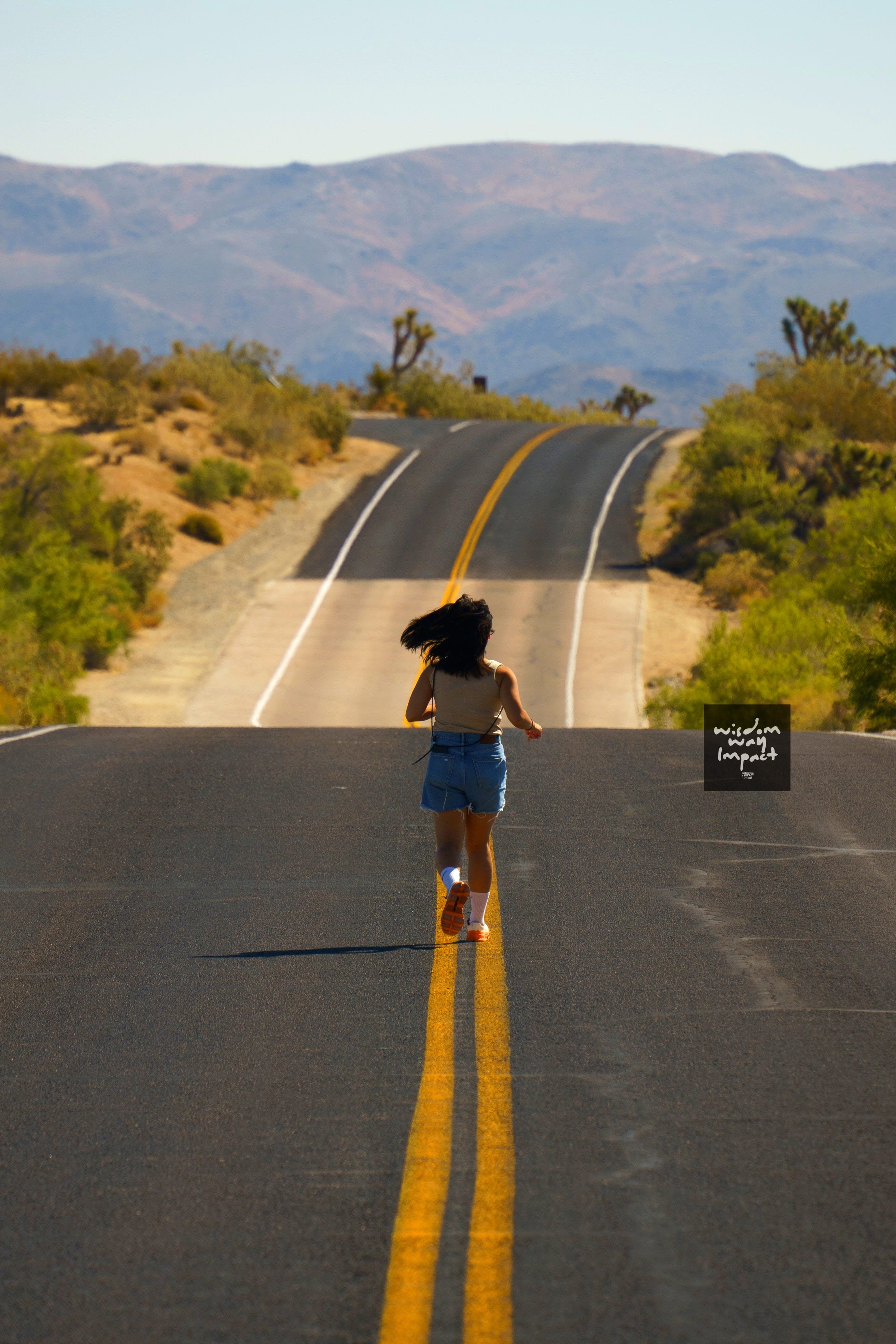
After completing three full years of training and practice in Jungto Society’s postulant program—think of it as an intense, long-term monastic retreat—the final assignment was called the pilgrim’s walk.
Our mentor, Venerable Yusu, said: “Stay at each temple for at least three days. Seek good teachers, learn from them.”
No itinerary.
No destination.
I was given twenty days, 100,000 won (about 100 CAD), and my own body.
No phone. No internet. No reservations.
No possessions.
No dependencies—material or mental.
A journey where only the road and I existed.
Where do I sleep?
What do I eat today?
Which direction do I go?
Nothing was fixed, and the uncertainty was disorienting. I tasted real discomfort ever in my life—anxiety, fear, restlessness. It shocked me how unstable life felt without plans. How faithfully we’ve sedated ourselves with something called planning. Even small things—what to eat for lunch, when to wake up, who to meet this weekend—I couldn’t plan any of them without the routines or foundational anchors I had (home, work, friends and family, or ideas).
I unfolded a paper map and chose places by instinct—whatever tugged at my heart. Like walking with my eyes closed. Sometimes I hitchhiked. Nine out of ten times, cars passed me by. My lips mumbled awkward thank-yous to red taillights pulling away.
On lucky days, one car would stop—and that single yes carried the entire day.
My first stop was Guinsa, tucked deep in the valleys of North Chungcheong, a landscape straight out of a Hayao Miyazaki film. Inside the massive main hall, about forty laywomen—mostly middle-aged—were chanting, praying, and meditating. Their life’s suffering echoed through the sutras, raw and urgent.
Should I join?
I found a small corner, laid down a mat, and practiced alongside the ‘ajummas (a Korean word for a married, or middle-aged woman.)’ all night. For three days, we prayed, slept, and ate warm meals together.
A routine formed. My mind relaxed instantly. Then guilt crept in.
“Is it okay to spend my pilgrimage this comfortably?”
I saw my teacher’s face in my mind—reminding us to do the practices we avoid. No one was watching. No one would report on me. And yet, my conscience whispered.
So I decided: whenever comfort settles in, I will leave.
Just as my body adjusted, I packed my bag again.
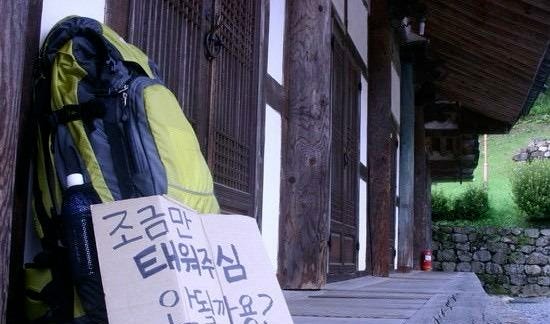
Three Days on the Road — Heading South
Korea has thousands of temples. Finding one wasn’t hard. Getting there was.
With limited money, every bus ride mattered. Once I reached Jeolla after a 6 hour bus ride from the northern region, I walked endlessly. Bus stops and convenience stores were far apart. Only fields, soft mountain ridges, and insects surrounded me. Hitchhiking became harder. After repeated refusals, I felt embarrassed even lifting my hand.
Then a white Jeep stopped.
“Is something wrong?”
“I’m traveling alone… could you drop me at the nearest station?”
“I’m sorry—I’m not headed that way.”
Another no.
Fifteen minutes later, the same car returned.
“You’re young. The sun’s setting. I felt uneasy thinking of you. The world isn’t kind these days—get in.”
The road was warmer than I had imagined.
In Gokseong, a woman gave me a ride and pressed an ice cream into my hand.
A small suburban old restaurant grandma scolded me—then gave me a room.
A stranger in Ulsan handed me a red umbrella because it might rain.
Tsundere angels everywhere.
That night, curled in a tiny back room of a country restaurant, I whispered to myself again and again:
‘This world is still livable. I will also give back to the world for all the help I’ve received.’
Asking for help turned out to be harder than walking. Being indebted takes courage. I practiced asking without expectation—no agenda, no emotional hooks. If refused, I trained myself not to shrink.
A Week In: Fear Remains, But I Am Not Fear.
After about a week, I learned how to knock.
The person who once hesitated at doors became someone who simply pressed the bell.
How literal the saying proved: Knock, and it opens. If not this one, then another, in time—so long as I don’t stop knocking.
When I dropped expectation—became transparent—rejection no longer shook me. A faint sting, maybe. But never enough to control me.
I drifted south and arrived at Hwaeomsa, one of the largest and most popular ones in the province.
“What did you come for?”
“Guidance.”
“What kind?”
“Life.”
“Live with a smile. Where are you sleeping?”
“Here, if I may.”
“Pull weeds. You can stay.”
At Guchungam, rain fell for days. The abbot monk kindly offered me a small, cozy, charming room near the practice area where the ordained monks train — in the upper part of the temple property, the quietest place, far from the touristy and busy areas.
One night became three. Flowers bloomed quietly in hidden corners; small stone and wooden crafts were tucked among them, lining every tiny step I took. The place felt like a fairytale.
It became so comfortable and safe. Eventually, I left again.
In Suncheon, in the southern east region, money ran low. I needed to hitchhike. At a local bank, I explained my trip to a teller. A man nearby approached.
“I’m heading out soon. Where are you going?”
He was the branch manager. We talked about polarization, population decline, cities. Before I realized it, we had reached Suncheon Bay.
“Let’s keep thinking about the problems we carry collectively,” he said. “Try to be useful.”
I stood alone again, looking at the vast wetlands. Hitchhiking no longer embarrassed me. Walking felt natural.
I was alone—but not lonely.
Farmers. Fishermen. Inn owners. Restaurant ladies.
They were the bodhisattvas of daily life.
This journey ran on the grace of strangers. Just like my life does.
People you’re meant to meet—you meet.
Things meant to happen—happen.
All these moments meshed perfectly, like clockwork. One step later, one exit earlier, one glance delayed—and the story would have changed entirely.
On that road, I learned to drop everything: fear, comfort, boredom, loneliness, the urge to cling.
Those twenty days filled me with a courage money cannot buy.
For those who drop the self, there are no walls.
For those who step beyond the self, nothing is impossible.
Knock, and it opens.
Courage rises.
A new beginning begins.
When we stand and walk, the whole world comes into the heart. So, embrace it!
It’s time to leave the temple—
and meet the youth of the world.
📝 Journaling & Perspective-Shift Practice
Perhaps the courage we need is not for a “new world,” but to open the door inside. Have you ever knocked while trapped in fear?
What inner fear most blocks you right now? Fear of what, exactly?
What lies beyond that fear? If you moved through it, what might you experience?
What small but intense “attempt” most changed you?
Which inner room do you want to open today?