
How Life Changes
📬 Letter #7: From Suffering to Addiction, From Awareness to Choice (Neuroscience × Buddhism)

Life changes.
Sometimes not the way we want—but always the way we meet it.
I still remember one morning vividly.
A crisp blue sky in the fall.
7:30 a.m.
My first step out of the apartment building, school only ten minutes away.
On the way to high school, a sentence I had read somewhere came back to me:
“Happiness is something I construct. Suffering, too, is something I construct.”
It felt like unexpected relief. My heart instinctively understood what that meant. A complete comprehension!
How free is that? If happiness is something I make, then today could be a happy day—depending on how I meet it, how I see it.
For a 17-year-old girl whose days were mostly unhappy and stressful, this felt revolutionary.
How My Life Shifted
High school felt like a jail.
From 8 a.m. to 8 p.m.—often until midnight—back-to-back 50-minute classes, no summer & winter breaks, no proper PE classes, for three years. It was a private high school known for ranking near the top in the city, just below elite college-prep schools. Inside, the culture was rigid, competitive, and quietly cruel.
Almost every other month, the Top 100 rankings were posted publicly on the wall.
How humiliating—for teenagers.
If you ranked in the top 30, you earned access to a special library: individual desks, powerful air-conditioning in summer, heaters in winter, silence. If you weren’t “smart enough,” you stayed in noisy classrooms packed with thirty-plus students.
Ironically, many of my closest friends were among those exclusive library students.
I wasn’t.
If I was lucky—especially in math—and guessed correctly, I might see my name somewhere near the middle or bottom on the wall.
What I felt wasn’t just stress. It was exclusion.
Being involuntarily labeled. Categorized. Publicly!
I was upset at the education system. At society. At myself—for not fitting better, not being smarter, not becoming one of the “elite.”
And then that morning happened.
Walking to school in my uniform, something felt lighter than a feather. For the first time, my steps didn’t feel heavy.
That idea—happiness and suffering are constructed—came from an ethics textbook. A single line. But it was my first real encounter with Buddhism.
Watching My Mother Change
Around the same time, my mother began changing too.
Through Buddhist practice.
As a child, I experienced her as a superhuman figure—never missing a day of work, raising two children, endlessly responsible. And always sick. Mom acted superhuman for our family, but she was actually a weak person.
In my memories, she was constantly trying to heal her body. Weekends were spent sleeping, exhausted, operating in survival mode. Especially with me—the rebellious, adventurous troublemaker—her love often came as strict control.
I didn’t like her love language. “Tough love” felt too tough.
So we drifted apart. We barely spoke. No real conversations. Just coexistence. Even that coexistence often felt uncomfortable.
Then slowly, something shifted.
For three years of my high school life, my busy working mother made my lunch box every morning. Carefully. Warm. Nutritious. Thoughtful.
It was something I had always wanted—to come home knowing my mother was there, caring in a visible way.
More than our direct relationship, it was who she became that changed me:
lighter, calmer, more open. Her face softened. Her energy changed.
I saw how a one-degree shift in perspective could change an entire year.
A family dynamic.
The way one meets the world.
That was powerful and magical!—not just for the person practicing, but for everyone around them.
That’s when I learned something deeply: my own suffering is also reducible.
Maybe not erasable—but changeable.
And today, I say this with conviction: Life can change—if we choose to meet it differently, right now.
Human Nervous Systems, Human Pain
What has always fascinated me about Buddhism is that it is relentlessly about humans.
Not in a mystical way. In a practical, almost scientific way—just ancient.
Mental health, addiction, burnout, anxiety, trauma, and healing are not separate topics. They are different expressions of the same question:
How does a human nervous system try to survive in a complex world?
So let’s start there.
A Small Self-Check (Don’t analyze—just notice)
Pause for a moment. When you feel overwhelmed, stressed, lonely, or unsure—what do you instinctively reach for?
Scrolling
Food
Alcohol
Work
People
Sleep
Distraction
Don’t judge it. Don’t explain it.
This doesn’t reveal your personality or morality. It shows how your nervous system learned to cope.
None of these responses are wrong. They are adaptations.
Every one of us carries stress habits and daily micro-addictions—social media, sugar, productivity, relationships. These are not failures.
They are survival strategies.
People Don’t Wake Up Wanting Addiction or Suffering
In psychology, we talk about concurrent disorders: anxiety, depression, trauma, and addiction often appear together.
In Buddhism, this is simple.
Cause and effect.
Buddhism doesn’t treat suffering as random or moralistic.
It asks: What conditions were present?
When loneliness, trauma, sadness, anxiety, or depression arise, people don’t say,
“I need healing.”
They typically say,
“I need relief. NOW.”
So we reach for whatever can:
soothe discomfort quickly
numb pain temporarily
distract us from what we don’t want to feel
This can look like substances. Or endless scrolling, overworking, constant socializing without depth, shopping, gambling, casual sex, gaming, excessive sleep.
These are not “bad people.” They are humans responding to pain with the tools available to them.
The issue is not behavior alone. It’s that we often look only at what is happening—never why.
Living Inside Thought: The Nervous System Trap
Most of us live almost entirely inside our heads.
Planning.
Replaying.
Judging.
Anticipating.
Comparing.
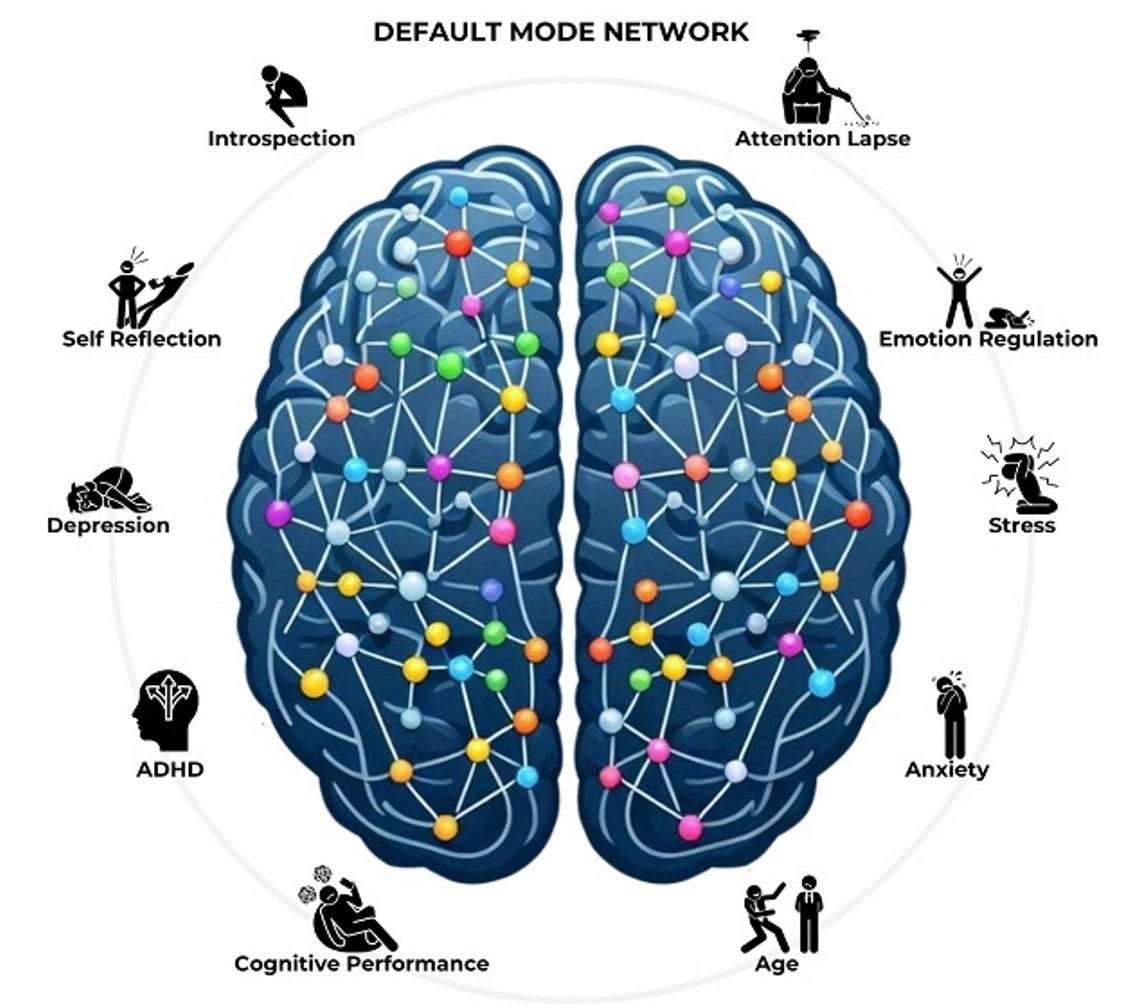
We call this productivity. Neurologically, it keeps the brain in a chronic low-grade threat state.
In neuroscience, this is linked to the Default Mode Network (DMN)—active when we:
ruminate about the past
worry about the future
construct identity narratives (“me, my, mine”)
rehearse or defend ourselves mentally
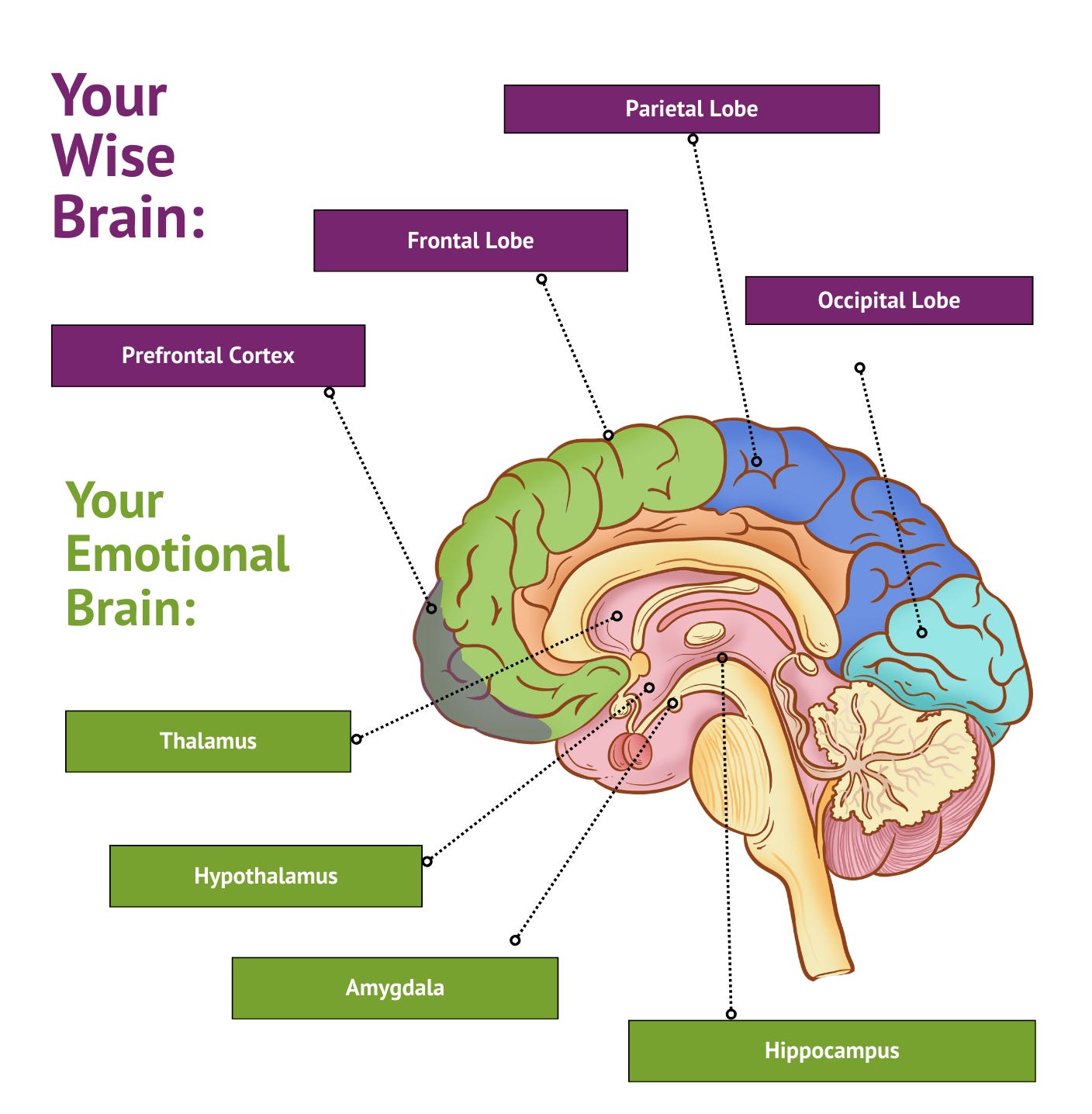
When the brain perceives threat—real or imagined—the amygdala activates. Stress hormones rise. Blood flow shifts toward survival circuits.
Sensing shuts down. Choice narrows.
That’s why under stress, we don’t choose the best option—we choose the most available one.
Why Awareness Changes Everything
This is where Buddhism and neuroscience meet.
When attention returns from thinking to direct sensation:
amygdala activity decreases
the parasympathetic nervous system activates
the prefrontal cortex (regulation, perspective, decision-making) comes back online
Mindfulness practices are associated with:
reduced DMN overactivation
stronger emotional regulation
greater interoceptive awareness
Buddhism discovered this 2,500 years ago. Mindfulness isn’t positive thinking. It’s seeing clearly—even when what we see is uncomfortable.
When clarity appears, space appears. And that space is where choice returns.
*I recorded a full talk explaining the practical framework behind this process:
*If you want structured guidance (12-week online course) HERE
Addiction and Habit Are Not Personal Failures But Systems
In both Buddhism and neuroscience, addiction is a process, not a flaw.
First, something helps.
Then repetition happens.
Over time, a habit forms.
Like water following an existing stream—the deeper the channel, the easier it flows again.
You don’t yell at the water.
You reshape the conditions.
Neuroplasticity tells us the brain changes based on what we repeatedly practice.
Stress strengthens stress pathways.
Awareness strengthens awareness pathways.
Compassion strengthens compassion pathways.
Change happens through consistency—not force.
Not grand transformations. Small, repeatable interruptions.
Noticing before reacting
Feeling the body when the mind spins
Naming emotions instead of suppressing them
Returning to simple routines
Healing in safe relationships
Life doesn’t change because we suddenly fix ourselves. It changes because the nervous system learns—slowly—that safety is possible.
When safety increases, clarity follows.
That’s when real choice returns.
This work isn’t about being calm all the time.
It’s about being less hijacked.
And from there, healing—personal and collective—becomes possible.